 English
 简体中文
简体中文
 ru
ru
 es
es

How to Tell If a Hydraulic Solenoid Coil Is Bad
1. Introduction
A hydraulic solenoid coil is a key electrical component in modern hydraulic control systems. It converts electrical energy into a magnetic force that operates the solenoid valve, controlling hydraulic oil flow in machinery such as excavators, loaders, and industrial equipment.
When a solenoid coil begins to fail, it can cause serious operational issues such as unstable hydraulic movement, weak response, or complete system shutdown. In heavy machinery brands such as JCB, BOBCAT, CASE Construction Machinery, and JOHN DEERE Construction Equipment, coil failure is one of the most common electrical hydraulic faults.
This guide explains the symptoms of a bad hydraulic solenoid coil, how to diagnose the problem, and how to confirm failure using simple testing methods.
2. What Does a Hydraulic Solenoid Coil Do?
A hydraulic solenoid coil generates a magnetic field when energized by an electrical current. This magnetic force moves the internal plunger of the solenoid valve, allowing hydraulic oil to flow through different channels.
In excavators and hydraulic systems, this function is essential for:
- Boom and arm movement control
- Travel speed switching
- Auxiliary hydraulic functions
- Directional control of hydraulic oil
Without a properly functioning coil, the solenoid valve cannot operate correctly, leading to system malfunction.
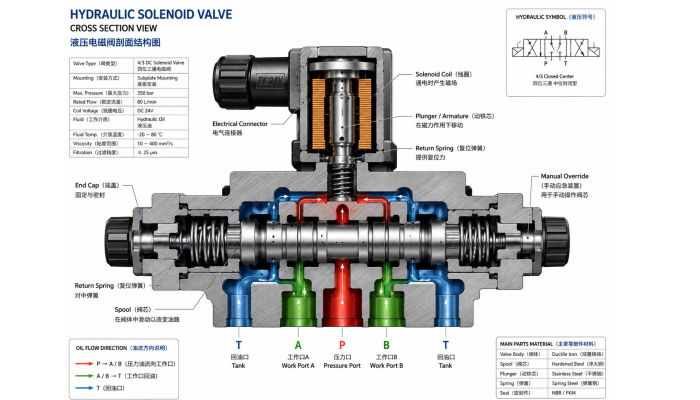
Hydraulic solenoid valve internal structure showing coil, plunger, spring and spool in technical diagram
3. Symptoms of a Bad Hydraulic Solenoid Coil
A failing hydraulic solenoid coil usually shows clear electrical and mechanical symptoms. Early detection is critical to avoid costly hydraulic system damage.
Common Symptoms:
- No response when the solenoid is energized
- Weak or inconsistent hydraulic movement
- Coil overheating during operation
- Burning smell from the coil housing
- Intermittent hydraulic function failure
- Blown fuses or electrical faults
- Clicking sound without hydraulic action
- Machine enters error or safety mode
These symptoms often indicate electrical failure inside the coil, such as short circuit, open circuit, or insulation breakdown.
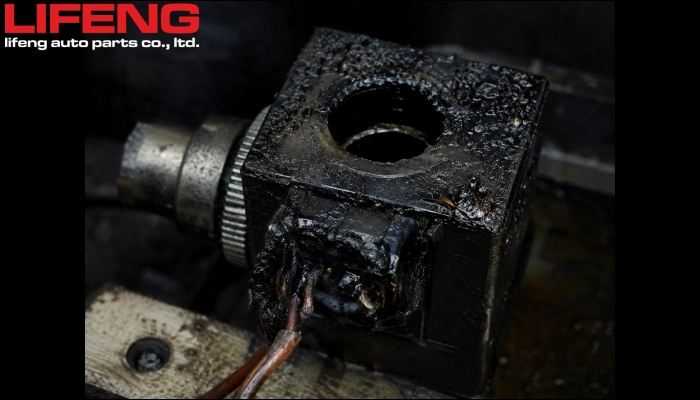
Burned hydraulic solenoid coil with overheating damage and melted insulation
4. How to Distinguish Between a Healthy and a Failed Coil
After observing common failure symptoms such as overheating, weak hydraulic response, or electrical faults, the next step is to understand the visual and structural difference between a normal hydraulic solenoid coil and a failed one.
The comparison below helps technicians quickly identify whether the coil is in good condition or has already suffered internal damage such as winding burnout or insulation failure.
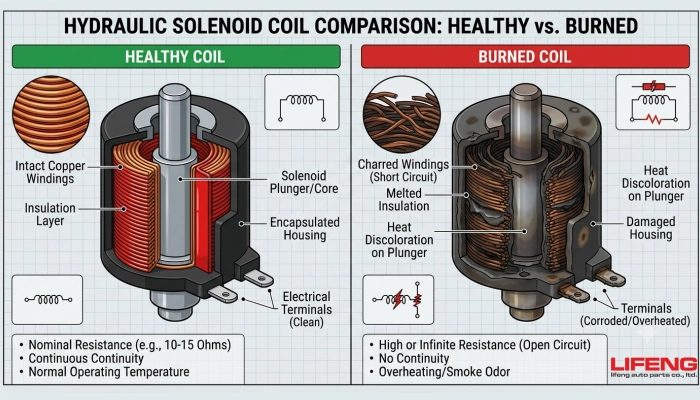
Comparison between healthy and failed hydraulic solenoid coil showing normal and burned condition
5.Main Causes of Coil Failure
Understanding the root causes helps prevent repeated failures.
Common causes include:
- Unstable or excessive voltage supply
- Continuous overheating during operation
- Moisture or water ingress
- Electrical short circuit or wiring damage
- Long-term vibration and mechanical stress
- Contaminated hydraulic environment
Poor maintenance conditions significantly increase coil failure rates in heavy machinery.
6.How to Test a Bad Solenoid Coil
The most reliable method to test a solenoid coil is using a digital multimeter.
Step 1: Disconnect the Coil
Disconnect the electrical connector from the solenoid valve.
Step 2: Measure Resistance
Set the multimeter to resistance (Ω) mode and test across the coil terminals.
- Normal coil → stable resistance within specification
- Open circuit → infinite resistance
- Short circuit → extremely low resistance
A failed reading usually indicates that the coil must be replaced.
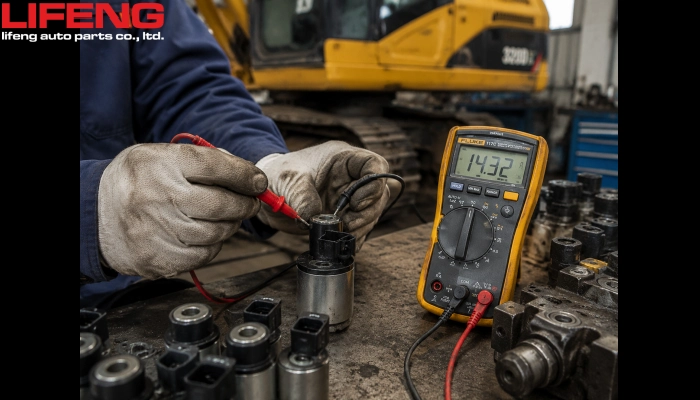
Technician testing hydraulic solenoid coil resistance using digital multimeter
7.Visual Inspection Tips
Before electrical testing, perform a quick visual inspection.
Check for:
- Burn marks or discoloration on coil body
- Broken or loose wires
- Corrosion or rust
- Oil contamination or leakage
- Cracked insulation or housing damage
Many failures can be identified visually before using diagnostic tools.
8.Can a Bad Solenoid Coil Be Repaired?
In most cases, a damaged or burned solenoid coil cannot be repaired.
Once internal winding damage or short circuits occur, replacement is the only reliable solution.
Using high-quality replacement coils helps restore stable hydraulic performance and reduces downtime.
9.Preventive Maintenance Tips
To extend coil service life:
- Maintain stable voltage supply
- Avoid continuous overheating
- Keep connectors clean and dry
- Inspect wiring regularly
- Prevent oil and water contamination
- Replace worn seals promptly
Proper maintenance significantly reduces unexpected hydraulic failures.
10.Applications in Heavy Equipment
Hydraulic solenoid coils are widely used in:
- Excavators
- Loaders
- Bulldozers
- Industrial hydraulic machines
They are critical components in machines manufactured by brands such as JCB, Komatsu, and Hitachi Construction Machinery.
11. FAQ
Q1:What are the symptoms of a bad hydraulic solenoid coil?
A:Common symptoms include overheating, no response, weak hydraulic action, and electrical failure.
Q2:Can a solenoid coil fail intermittently?
A:Yes, due to loose wiring, unstable voltage, or internal insulation damage.
Q3:How do you test a hydraulic solenoid coil?
A:Use a multimeter to measure resistance and check for open or short circuits.
Q4:What causes solenoid coils to burn out?
A:Overvoltage, overheating, and moisture ingress are the most common causes.
12. Conclusion
The symptoms of a bad hydraulic solenoid coil are usually easy to identify if proper diagnostic steps are followed. Early detection through resistance testing and visual inspection can prevent major hydraulic system failures.
If your machinery is experiencing solenoid coil failure, replacing it with a reliable aftermarket or OEM-compatible part is the most effective solution.
For high-quality hydraulic solenoid coils compatible with major excavator brands, professional suppliers can provide stable performance and long service life.
